
How to Read a Free OnlyFans Page Before You Follow
Reading an OnlyFans page before you follow it takes about five minutes and saves a lot of frustration. The platform has no discovery feed, no directory, and no recommendation engine, so the page itself is the only thing a visitor can judge.
A free page is simply a page where the subscription price is set to $0. Creators on free pages earn through pay-per-view messages and tips rather than through a monthly charge.
Profile signals that matter first
The profile header carries more information than most visitors realise. Display name, handle, banner, avatar, bio, and any pinned post are all editable, which means every element is a deliberate choice.
The three fields worth checking first are the handle, the avatar, and the bio. The handle is the hardest to change later without losing followers, so a handle that matches the display name is usually a sign of a page built with some care. The avatar tells you whether the creator updates the page at all.
- Name and handle alignment: a matching pair suggests a page that has been set up once and kept, while a random handle often points to a repost page or a placeholder.
- Avatar quality: a clear, current image suggests active maintenance; a stock image, a logo, or a blurred crop suggests the page is run in bulk.
- Profile completeness: a filled-out location, bio, and banner together indicate a creator who expects visitors to make a decision.
None of these three signals proves anything on its own. They are filters, not verdicts. Their value is that they take seconds to check and remove obviously weak pages before you spend time on the rest of the review.
Activity recency check
Recency is the single strongest signal on a free page. A free page earns through messages and tips, so a page that has not posted in weeks cannot be earning from those channels in any meaningful way. Scroll the visible post history and note the date of the newest post and the spacing between posts.
Pinned posts are a separate signal. A pinned post is chosen by the creator, so it usually represents the page as the creator wants it seen. If the pinned post is months old while newer posts exist, the creator is not curating the page.
The table below maps three common activity patterns to what they usually suggest. Treat these as probabilities rather than rules, because a single quiet week does not define a page.
| Activity pattern | What it usually suggests |
| Posts on most days, newest post within 48 hours | The page is being actively run and messages are likely answered |
| Clusters of posts every few weeks, gaps in between | The creator batches content; responses may be slow but the page is alive |
| Newest post older than three or four weeks | The page is dormant or abandoned; following it rarely leads anywhere |
Dates are also worth reading in sequence rather than in isolation. A page that posted heavily for one month and then stopped tells a different story from a page that has posted steadily at a low volume for a year. The steady page is usually the better follow.
Bio and link hygiene
The bio is where most misleading free pages give themselves away. Vague text is not automatically a problem, because some creators keep bios short on purpose. The issue is when the bio makes claims that nothing else on the page supports, or when it points to links that no longer work.
Check every link in the bio by looking at where it goes, not just whether it exists. A link that redirects to an unrelated page, a link that asks for payment details outside the platform, and a link that leads to a dead domain are all reasons to stop the review. On-platform links are safer because the platform handles billing and disputes.
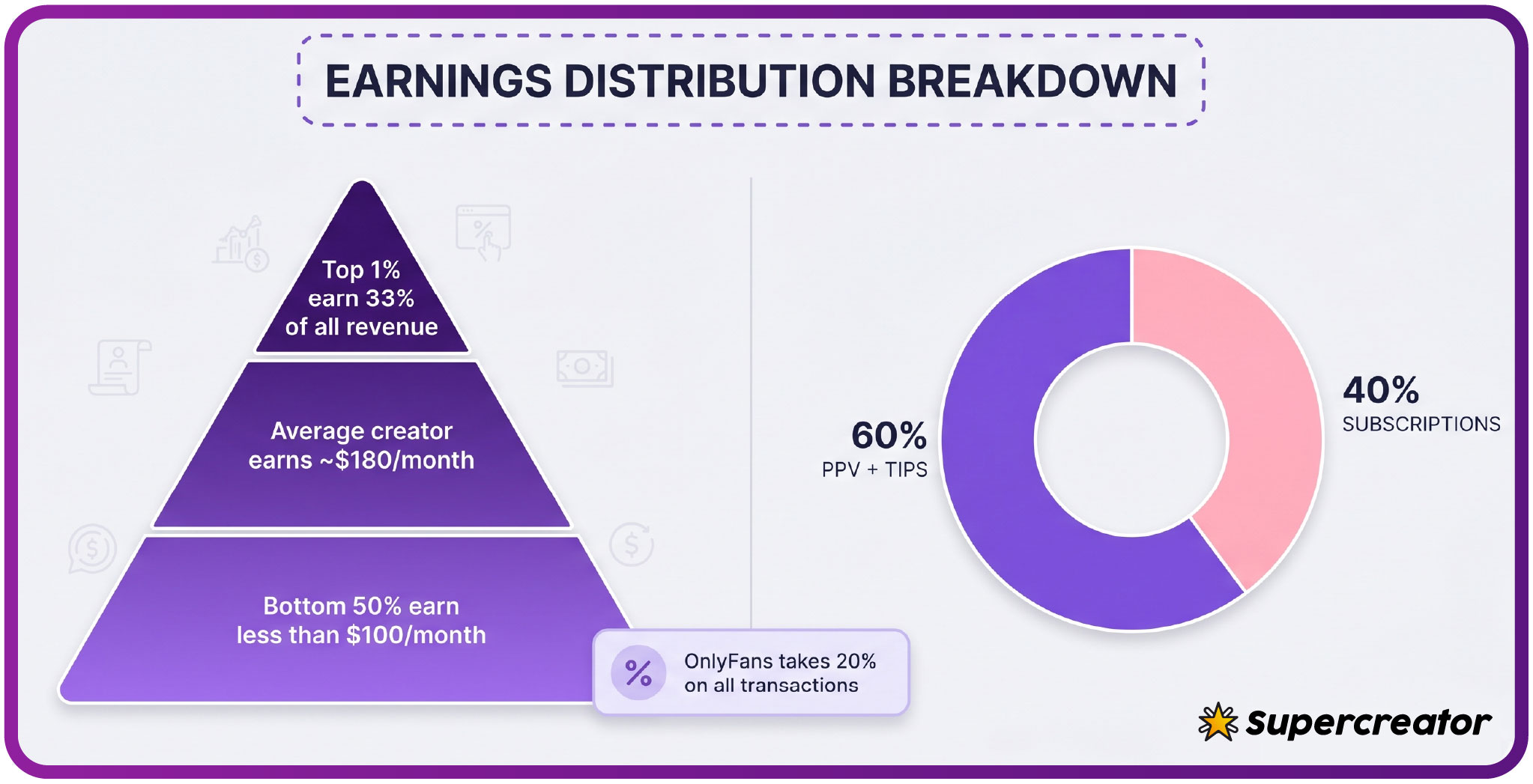
Practical tip: if a bio link asks you to pay anywhere other than the platform checkout, close the page. OnlyFans takes a 20% fee on subscriptions, tips, and pay-per-view messages, and the creator keeps 80%. Any request to move payment off-platform removes the protections that come with that system.
Copied text is a softer signal but still useful. Identical bio wording across several pages usually means one operator running a network of pages, which changes how much individual attention any single follower receives. Rewritten but structurally identical bios point to the same conclusion.
- Bios that promise specific content but never describe the page’s actual focus.
- Links that redirect away from the platform or open a payment page.
- Bio text that appears word for word on other pages you have already seen.
- Contact details that push you toward a messaging app instead of platform messages.
- Claims about volume or schedule with no dates anywhere on the page to support them.
Follower and like math
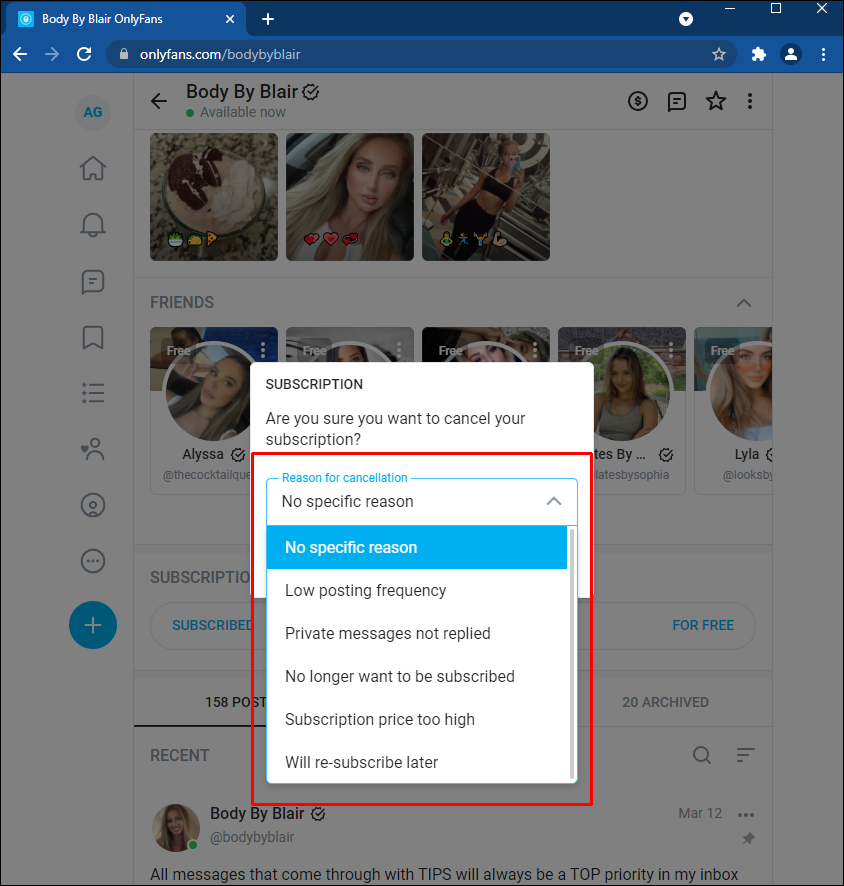
Raw follower counts mislead because they can be bought, inherited, or accumulated during a single viral moment years ago. A page with a large following and very few likes on recent posts is not the same as a page with a smaller following and consistent engagement. The ratio between the two is more informative than either number alone. For a starting point, free onlyfans india accounts collects free pages.
Likes per post are visible on most pages, so compare a recent post against an older one with similar content type. If engagement has fallen sharply while the follower count stayed flat, the audience has stopped paying attention. If engagement is stable, the page is holding its audience.
When you compare two or three pages side by side, look at the same ratios for each. This keeps the comparison fair and stops one unusually large page from skewing your sense of what normal looks like.
- Likes per post divided by follower count, compared across recent posts.
- Number of posts per week against the number of replies visible in comment threads.
- Age of the account against the size of the following it has built.
- Growth in followers between two posts of similar type and similar date.
Ranking sites exist partly because the platform offers no directory and no comparison tools, and BestOnlyFans is one example of a site that groups free pages so visitors can compare them before following. That kind of comparison is useful, but it does not replace checking the page itself. A listing tells you a page exists; the page tells you whether it is worth your time.
Free versus upsell wording
Free pages still sell things, and the wording around that selling is where expectations get set. A page that clearly separates free access from paid extras is easier to follow than one that blurs the line. Read the bio and the pinned post for words that signal gating.
The subscription price itself is a separate question. Paid pages typically sit between $4.99 and $15, with many clustering around $5 to $10, and the platform-wide range runs from $4.99 at the minimum to $49.99 at the maximum. There is no base price below $4.99; only promotional first months may dip under that figure.
| Phrase pattern | What it hints at |
| “Free page, paid extras in DMs” | Clear split; the free tier is real and the paid tier is labelled |
| “Subscribe free, unlock everything” | Most content sits behind pay-per-view messages despite the free label |
| “Limited free spots” or countdown wording | Pressure framing; check whether the free tier actually delivers anything |
One more mechanical detail matters if you ever move from a free page to a paid one. When a creator raises the subscription price, auto-renew stops, and existing access continues until the current paid period ends. Knowing this prevents surprise renewals and makes price changes easier to track.
Before you follow checklist
The whole review fits into five minutes once you know the order. Run the steps below in sequence and stop early if any step fails badly, because the remaining steps rarely recover a page that has already shown a clear problem.
- Check the handle, avatar, and bio for basic consistency.
- Find the newest post and confirm it is recent.
- Compare the pinned post date against the newest post date.
- Open every bio link and confirm it stays on the platform.
- Compare likes on a recent post against likes on an older one.
- Read the free-versus-paid wording and note what is gated.
- Decide whether the page matches what you expected before clicking follow.
If you want a second opinion, a rankings site such as BestOnlyFans can show how a page sits next to similar ones, and that comparison sometimes reveals a pattern you missed. It is a supplement to the checklist, not a replacement for it.
Extra detail
Most wasted follows come from skipping the review entirely, but a few specific mistakes account for the rest. Avoiding them is straightforward once you know what to look for, and each one costs only a few seconds to check.
- Following on the strength of a single post without checking the posting dates around it.
- Assuming a large follower count means an active page.
- Ignoring bio links because the page itself looked fine.
- Confusing a promotional first month with the standard subscription price.
- Treating a free label as a promise that everything on the page is free.
- Forgetting that a price increase stops auto-renew and ends access at the close of the paid period.
- Using one ranking site as the only source instead of checking the page directly.
Reviewing a page this way takes less time than reading a single long post. The habit compounds, because a shortlist of pages that pass the checklist is far easier to manage than a follow list built on impulse. BestOnlyFans refreshes its rankings every month.
FAQ
Does a free page cost anything at all?
No. A free page has the price set to $0, so following costs nothing; the creator earns through pay-per-view messages and tips instead.
Why do some free pages ask for payment later?
Free access usually covers a limited portion of the page, and the rest sits behind pay-per-view messages that are unlocked individually.
What happens if the price goes up after I subscribe?
Auto-renew stops when the creator raises the price, and your existing access runs until the current paid period ends.
How much of my payment reaches the creator?
The platform takes 20% on subscriptions, tips, and pay-per-view messages, and the creator keeps the remaining 80%.